That’s a frightening headline for the Hollywood studios.
It wasn’t supposed to work.
It was an ill-planned experiment that was supposed to fail.
Seriously, who would watch that crap?
Well… give one point to Silicon Valley in the Great Content Wars of 2012.
(This doesn’t mean I’m giving any sort of credit to that jerk Paul Graham – who issued a war on Hollywood. Graham and Y Combinator, in my opinion, represent all that is bad in Silicon Valley.)
When YouTube announced last year that they would put up $100 million dollars to fund original content channels, no one in Hollywood gave it much notice.
What most people expected was something like Paul Rudd walking around, eating Doritos and throwing out non-sequitors.
Basically, that no one would give a shit or watch – and if they did, big companies certainly wouldn’t throw any advertising money at it.
“We’re saving our big dollars for high-quality, professional Hollywood content, goddamnit!” (Imagine them saying it with big cigars in their mouths for greater effect.)
Cut to one year later and there is something real going on at YouTube – and they are just getting started (see all the “Coming Soon” labels on the left graphic of the channels yet to launch).
Channels are launching with the buzz normally generated for broadcast TV or feature film premieres – and for a lot less money.
Here’s a snapshot of the numbers (July 4, 2012). These are significant numbers.
Granted, this new “premium” content on YouTube is NOTHING EVEN CLOSE to the quality of a major studio feature film or TV series. Everything about it screams “slapped together.”
So if that’s true, then why should Hollywood be scared?
Because the generation growing up with YouTube does not distinguish between NBC, ESPN, Hulu, iPhone Apps, etc.
Eyeballs can only look so many places at one time and Broadcast Networks are asking you to keep them locked for three hours at a time (and watch the ads).
That’s fine for my mom (and, frankly, fine for me, too – though my iPhone is in my hand while I watch) but not fine for my daughter.
No chance does she one day turn to me and say “You know what, mom? I’ve become a Broadcast Network junkie. Those shows are what I love to watch the most.”
And this is true all around the world.
The kids who are playing online games, watching videos and surfing around the various social networks are not suddenly going to watch Broadcast Networks when they turn 30.
“Now that I’m older and finished with my wandering gadgets, I’m ready to settle in my easy chair and watch quality programming and check out some of the interesting advertising that happens during those shows.”
Never going to happen.
And, of course, duh, the big media companies know this is never going to happen.
But here’s the kicker: Most who grew up with the Internet really don’t care about quality. If they did, Zynga would have never become popular and MP3s would have been shunned immediately for their lack of decent fidelity.
The youth of the world have been raised not to care about such things (of course, I realize there are exceptions).
A couple of years ago, I wrote a piece called “Broadcast Networks: On Death and Dying” and regardless of the few breakout hits that do exist on Broadcast (which results in big profits from International markets and off-net syndication), it’s really expensive content to produce and it’s just not a long-term strategy.
But don’t get me wrong – studios would be foolish to give up this extremely profitable business model while the market is still there. (“Two Broke Girls” just got $1.5 million an episode from TBS – who could give that up?!)
It’s a real conundrum.
Hollywood studios can’t abandon a dying business when it’s still so profitable. But they can’t plan for the future – because the future is the death of their current business model.
And attempting to replicate what YouTube is doing would be a downright embarrassment for studios used to creating such high-priced, high-quality content.
It would be quite a step down.
Next year is crucial for content business. Trends may become irreversible and the next ten years could become crystal clear.
It is possible that both worlds can exist and make a lot of money (one with super high margins, the other with less).
The ratings for this year’s crop of Broadcast fall premieres will be heavily scrutinized. (October 17 update: Ratings have started off terrible with all networks except NBC experiencing double-digit declines without much hope for improvement.)
New shows need to emerge more than they ever have in the history of television (no platitudes here, man). Syndication pipelines need to remain full with bidding wars from multiple channels and station groups.
If that happens, old media and the current way of operating survives for another five years or so.
If not, there’s only so many more spring upfronts that advertisers will show up for.
Next year, I guarantee, the YouTube upfront presentation will get as much press as CBS’ upfront – regardless of how many more stars CBS pulls onto the stage.
Why is that?
Because it’s new. It’s exciting. And new and exciting always wins.
And, remember, this is a reality TV world (created by Hollywood) where everyone can be a star.
And now those stars don’t need Hollywood anymore.
Jill Kennedy – OnMedea


Like
America and the world are completely on Katie’s side and anything other than full capitulation by Tom Cruise and Scientology will only make matters worse.
OK – let’s say you’re 30 years old.
“A Prayer For Owen Meany”
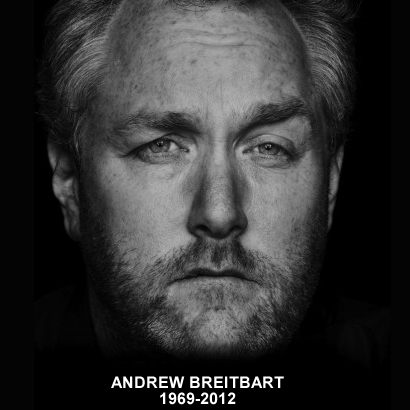
Andrew Breitbart died just after midnight last night.
I actually watched last night’s “American Idol” Season 11 premiere.
Another problem, last night I realized the talent in this country is all the same (either that or the “AI” producers want the same talent).
OK, just admit it guys, you love movie stars and only
If a hot chick or guy can sort of speak (and even that may not be a prerequisite – look at “The Artist”), they have a chance to get nominated for a Golden Globe.
There is an evil temptation that far too many companies are having trouble resisting – the temptation to launch a new product or service on Facebook.
Spotify and other media companies need to resist the temptation of the 750 million non-paying users (which includes millions of dogs and cats who don’t really care what songs they listen to).
Today, I read an analyst report written by Vasily Karasyov of Susquehanna Financial Group titled “The Death of Superheroes”.
Here’s the point: People are not tired of Superheroes. You cannot blame the superhero for the failure of corporate mortals.
Once one high-concept or genre film hits it really big (i.e., “Alice In Wonderland”) suddenly every studio in town needs to have that high-concept or genre type film in the pipeline ASAP.
With one mighty slap, Wendi Deng Murdoch may have saved her husband’s company.
I’m going to start with a really stupid statement: Filmmakers are a very important piece of the filmmaking process.
So Michael Bay knows how the brain reacts to images? Has there been a study on how the brain reacts to Michael Bay films? My hypothesis… it slowly dies.
Imagine what the theaters were like when “The Godfather” was first put out. Gordon Willis painstakingly lit that film and it was absolutely gorgeous and it was shown (and loved) on a 1971 movie projector. “Jaws”, “Close Encounters…”, “Star Wars”… etc. etc. etc. were all made and projected with the equipment available at the time. And these are classic films. Whether it was shown light or dark had nothing to do with how it was received.